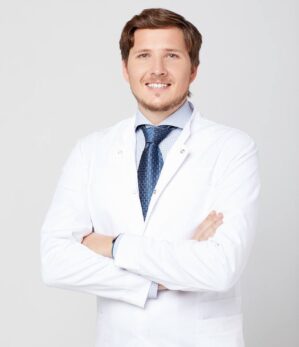
Doctor Artem Naimushin
ABOUT ME

Doctor Artem Naimushin

Oral surgeon and implant dentist specializing in dental implants, bone grafting and complex extractions.

  • LICENSE NUMBER 2-183193
  • WORK EXPERIENCE 15+ years
  • LOCATION Tel Aviv, Israel
  • E-mail anaimushin@gmail.com
  • phone +972 52 691 1090
  • appointment days By appointment

My name is Artem Naimushin.

I practice dental implantology and surgical dentistry in Tel Aviv: complex extractions, bone grafting, soft-tissue surgery, and cases where “just placing an implant” is no longer enough — including the management of complications after previous treatment.

Many patients come with the same questions:
Will it hurt? Is bone grafting really necessary? How many stages are ahead, and can it be done more simply? I do not rush decisions or suggest unnecessary treatment — first we clarify the diagnosis, the risks, and the realistic options.

It matters to me that you see the full picture: what is happening now, which treatment paths are available, and why each stage is needed. I build the plan individually — after an examination and the necessary diagnostics, including CT imaging if you already have it or if it still needs to be done.

My work is based on modern surgical protocols and digital planning: carefully, predictably, and with close attention to your safety and comfort.

If you would like to discuss your case calmly — contact me in any convenient way or leave a request through the online form.

See you at the consultation.

VIEW MY EDUCATION

Main areas of work

TOOTH EXTRACTION

using microsurgical techniques


Removal of teeth of any complexity, including impacted and ectopic teeth.

IMPLANTATION

using microsurgical techniques


Dental implantation in complex clinical cases and small bone volume, including simultaneous implantation with tooth extraction. All-on-4 implantation. Use of surgical guides.

BONE AUGMENTATION

using microsurgical techniques


Augmentation of the alveolar ridge/crest in all types of atrophy, autogenous bone techniques, guided bone regeneration using resorbable and non-resorbable membranes.

SINUS LIFT SURGERY

using microsurgical techniques


Open and closed sinus lift surgery.

ENDODONTIC SURGERY

using microsurgical techniques


Tooth-preserving operations: root apex resections with cystectomy and retrograde filling.

PERIODONTAL AESTHETIC SURGERY

using microsurgical techniques


Gum recession coverage. Correction of gummy smile. Clinical crown lengthening.

SOFT TISSUE PLASTIC SURGERY

using microsurgical techniques


Deepening of the oral vestibule, frenulum surgery of the upper lip, lower lip and tongue, and closure of oroantral communications of any size.

TUMORS

using microsurgical techniques


Surgical treatment of cysts and tumors of the oral cavity.

INFLAMMATORY DISEASES

using microsurgical techniques


Treatment of mouth abscesses, stomatitis and other diseases of the oral mucosa

TREATMENT OPTIONS

₪ ••••

TOOTH EXTRACTION

  • Initial consultation
  • X-ray
  • Anesthesia
  • Tooth extraction
  • Root socket cleaning
  • Putting a healing medication in
  • Sutures
  • Anti-inflammatory injections
₪ ••••

IMPLANTATION

  • Initial consultation
  • X-ray
  • Anesthesia
  • Implant placement
  • Healing abutment placement
  • Use of PRF new
  • Sutures
  • Anti-inflammatory injections
  • Post-operative check-ups
  • Surgical guide
₪ ••••

BONE AUGMENTATION

  • Initial consultation
  • X-ray
  • Anesthesia
  • Bone augmentation surgery
  • Use of PRF new
  • Sutures
  • Anti-inflammatory injections
  • Fixation pins
  • Collagen membrane
  • Bone graft

Your treatment plan and individual estimate are prepared after a clinical consultation, examination and any necessary diagnostic procedures.

My work in numbers

10000

IMPLANTS

has been installed

7

PATIENTS

minimum daily

15

YEARS

practical experience

5

ARTICLES

in specialized scientific publications

Working days

Consultations and treatment are available by appointment.

To make an appointment please contact me via this form

REQUEST A TREATMENT PLAN

Work experience

2023 – Present

Private Practice

DENTAL SURGEON, IMPLANTOLOGIST

Israel, Tel-Aviv

2022 - 2023

Digital Dentistry Clinic

Head of Surgical Department, Head of Quality Control Department

Kazakhstan, Almaty

2018 - 2022

Dental Hi-Tech Clinic

DENTAL SURGEON, IMPLANTOLOGIST

Russia, Moscow

2018 - 2022

Kopylova Dental Clinic

DENTAL SURGEON, IMPLANTOLOGIST

Russia, Moscow

2017 - 2018

PresiDent Clinic

DEPUTY CHIEF MEDICAL DIRECTOR. HEAD OF SURGERY DEPARTMENT

Russia, Moscow

2016 - 2018

PresiDent Clinic

DENTAL SURGEON, IMPLANTOLOGIST

Russia, Moscow

2015 - 2017

Central Research Institute of Dentistry and Maxillofacial Surgery

Practice focused on maxillofacial surgery

Russia, Moscow

2012 - 2015

Center of Dentistry and Oral and Maxillofacial Surgery of MSMSU

Practice focused on oral and maxillofacial surgery and dental surgery

Russia, Moscow

Education

2015 - 2018

Postgraduate studies - maxillofacial surgery, microsurgery

CENTRAL RESEARCH INSTITUTE OF STOMATOLOGY AND MAXILLOFACIAL SURGERY

2014-2015

Specialization - dental surgery, implantology

MOSCOW STATE UNIVERSITY OF MEDICINE AND DENTISTRY

2012 - 2014

Clinical residency — oral and maxillofacial surgery (Russia)

MOSCOW STATE UNIVERSITY OF MEDICINE AND DENTISTRY

2011 - 2012

Internship - general practice dentistry

MOSCOW STATE UNIVERSITY OF MEDICINE AND DENTISTRY

2005 - 2010

Dentist

MOSCOW STATE UNIVERSITY OF MEDICINE AND DENTISTRY

Membership in professional associations

  • Russian Association of Stomatological Implantology (RASTI), 2016-present.
  • International Association of Oral and Maxilofacial Surgery (IAOMS), 2015-present.
  • European Association of Ossteointegration (EAO), 2015-present.
  • Stomatological Association of Russia (STAR), 2012-present.

Feedback from my patients

  • Very attentive doctor, professional in his work. I recommend everyone to go to him

    Dombrovskaya A.
  • Attentive, responsive, professional!

    Maistrenko L.
  • An excellent, professional surgeon. Always with a good attitude, which instills immediate trust and peace of mind. Does everything with extreme care and concern. Highly recommend to everyone!!!

    Sikrier A.
  • I had a wisdom tooth extracted. Absolutely no pain, very quick. Wonderful doctor, disposes to himself. Highly recommended! Thank you!

    Pomiluyko I.
  • I had a tooth extracted. Everything was done in a professional, neat and high quality manner. Great counseling. Thank you doctor!

    Selgeeva V.
  • Thank you to the doctor - he did everything quickly, well done, he has sensitive, golden hands. Thanks again.

    Dadiani E.
  • Excellent attitude and highest level of competence

    Grinev A.
  • Thank you very much for the doctor's attentive reception, his long patience, to the assistant thank you. I especially note the qualified and friendly approach

    Zhikhareva O.
  • Wonderful, professional doctor, always in a good mood, which causes only a smile and positive emotions. A master of his craft with a capital letter. I recommend it to everyone!

    Surkov A.
  • Artem is a professional with a personalized approach. Removed 2 "wisdom teeth" - fast, painless, no consequences. I will definitely advise my family and friends to go to the Healthy Smile Polyclinic

    Antonova V.
  • Thanks to the doctor and assistant for their attention, care and professionalism!

    Kustova A.
  • Thank you so much to Artem. He's a wonderful doctor. Removed all my wisdom teeth painlessly. I recommend him to all my friends and acquaintances.

    Andreeva Y.
  • I sincerely thank Naimushin Artem, a dental surgeon, for his magic hands and skill, for his kind-heartedness and professionalism. He's also very sweet.

    Volkova T.
  • A wonderful doctor! Highly professional, empathetic, responsive, humble! I am satisfied with the work of the entire clinic staff and the modern medical equipment. Thank you all!

    Ranevskaya V.
  • Artem is a very tactful, empathetic surgeon, experienced, kind. He was a pleasure to work with. With a sense of humor. Recommended.

    Kang Y.
  • I am grateful to the doctor for attentive highly professional work.

    Kazakova O.
  • Very attentive, careful

    Dmitrieva N.
  • I was happy with the treatment and attitude. Artem handled the work professionally. Thank you for the skilled approach of all the staff.

    Permyakova O.

Recommendations after surgical treatment

Proper home care helps recovery after surgery and reduces the risk of complications. Choose your procedure: below we explain what to do in the first days, what changes are expected, and when to contact a clinician.

These guides supplement your individual instructions. If you were given different instructions after surgery, follow them. If advice is unclear or contradictory, clarify the plan with your treating clinician.

If treatment was performed with sedation or under general anaesthesia, also follow the separate instructions you were given about escort, eating and driving.

  • After tooth extraction, including wisdom tooth removal

    After extraction, a blood clot forms in the socket. It protects the wound and supports healing. During the first 24 hours it is especially important not to disturb it.

    First 24 hours

    1. Gauze pad. Keep biting on it for as long as your clinician instructed, usually about 20–30 minutes. Remove it gently. Do not eat or fall asleep with gauze in your mouth.
    2. If bleeding starts again, sit upright, place slightly damp clean gauze on the socket and bite firmly for 20 minutes without repeatedly checking it. If bleeding continues, contact the clinic. For heavy bleeding, seek help immediately.
    3. Do not disturb the socket. Do not touch it with your tongue, fingers or objects. For the first 24 hours do not rinse, spit forcefully or drink through a straw.
    4. Food and drink. After removing the gauze, if bleeding has stopped and you swallow normally, you may sip water. While numbness remains, avoid chewing and hot food or drinks.
    5. Rest on the day of surgery and keep your head slightly raised when resting.

    Sources: Oral Health Foundation; AAOMS.

    The following days

    1. Choose soft, not-hot foods such as omelette, mashed foods, yoghurt and soft fish. Chew mainly on the other side and return to normal eating gradually.
    2. Keep brushing the other teeth. Be careful near the wound and do not put the brush into the socket.
    3. From the next day, you may gently bathe the area with warm salty water unless your clinician gave different instructions. Do not rinse vigorously. Use medicated mouthwash only as prescribed.
    4. Cold through cloth during the first day may reduce discomfort. Apply briefly with breaks; do not put ice directly on the skin.
    5. Postpone intensive workouts and heavy physical work for several days. Return gradually according to the extent of surgery.
    6. Do not smoke or vape while healing, especially during the first days. Avoid alcohol in the early postoperative period and when taking medicines that are incompatible with it.

    Sources: BAOMS; AAOMS.

    What can be expected

    Soreness, swelling, bruising and some limitation of mouth opening can occur, especially after a difficult extraction. Swelling is often most noticeable on days two to three and then begins to reduce. After wisdom tooth removal, residual soreness and stiffness can last up to two weeks. Overall, you should gradually feel better.

    Sources: BAOMS.

    When to contact the clinician

    Contact the clinician if pain gets worse after a few days, especially if it spreads to the ear or comes with an unpleasant taste: this can be dry socket and may need treatment. Also report numbness of the lip, chin or tongue after the expected anaesthetic time has passed. Do not wait for a planned review.

    For fever, increasing swelling and other warning symptoms, follow the common help block below.

    Sources: Oral Health Foundation; BAOMS.

    Medicines after surgery

    Take medicines according to the written instructions you were given. If the prescription is unclear, you have a side effect, or the medicine does not help, contact the clinician.

    Anti-inflammatory medicines such as ibuprofen and/or paracetamol are often used for pain after tooth extraction. The right option depends on your health and other medicines. Do not exceed the prescribed dose and do not combine medicines with the same active ingredient.

    If you have kidney disease, a stomach ulcer, pregnancy, or take medicines that affect blood clotting, pain relief must be clarified individually. Do not use aspirin as an extra painkiller after surgery unless agreed. If aspirin or another medicine to prevent clots is prescribed long term, do not stop it yourself.

    Antibiotics are taken only when prescribed: the need and duration depend on the operation and clinical situation. Do not use leftover antibiotics or change the regimen yourself.

    Sources: ADA — oral analgesics for acute dental pain.

    When you need help

    Contact the clinic the same day if pain or swelling is increasing, you have a fever, pus discharge, bleeding that does not stop after pressure with gauze, or you get worse after initially improving.

    If breathing is difficult, you cannot swallow saliva, swelling of the tongue or neck is increasing quickly, or there is heavy bleeding with weakness, seek emergency care immediately. Do not wait for a WhatsApp reply.

    Sources: Oral Health Foundation — warning symptoms; Guy’s and St Thomas’ NHS — problems after dental surgery.

    Still have questions after treatment?

    Write when the operation was performed, what is bothering you, and how symptoms have changed. Attach a photo if needed. Messaging can clarify next steps, but an examination is sometimes required to assess healing.

    Contact the clinic on WhatsApp

  • After dental implant placement

    After implant placement, keeping the mouth clean and protecting the surgical area from trauma and early loading are important. If bone grafting or gum grafting was performed at the same time, restrictions may be stricter.

    First days

    1. Food. While the anaesthetic is working, avoid chewing and hot food. Then choose soft, not-hot food. Do not chew hard foods directly over the surgical area.
    2. Hygiene. Brush the other teeth as usual. Around stitches, follow your surgeon’s instructions: the time to start brushing depends on the procedure. Do not direct an irrigator jet at the wound until the clinician allows it.
    3. Mouthwash. If an antiseptic is prescribed, follow the start time, frequency and duration. Use it gently, without vigorous rinsing. Do not replace the prescribed medicine with a random breath-freshening rinse.
    4. Swelling and rest. During the first day, cold through cloth can be used in short sessions with breaks. Avoid intensive exercise in the first days.
    5. Smoking and alcohol. Avoid smoking and vaping while healing. For long-term implant health, stopping smoking completely is preferable. Avoid alcohol for at least the first 24 hours and when taking medicines that are incompatible with it.

    Sources: Guy’s and St Thomas’ NHS; AAOMS.

    If temporary teeth are fitted

    A temporary crown or bridge does not mean implants are ready for normal chewing load. Follow the prescribed diet until your clinician allows otherwise. Do not test stability with your tongue or fingers.

    A removable denture may be worn only according to the agreed plan: it must not press on the surgical area. If the implant, healing abutment or temporary restoration becomes mobile, stop loading it and contact the clinic. Do not tighten anything yourself.

    Bone integration takes much longer than the disappearance of pain and swelling; the timing of the next stage is decided individually.

    Sources: AAOMS; BSP.

    Healing control

    Moderate soreness, slight swelling, bruising and some blood in saliva may occur after surgery. If pain or swelling increases after initial improvement, an examination is needed.

    Attend scheduled follow-up visits even if nothing worries you. Stitch removal timing depends on the material and procedure. Do not remove stitches yourself.

    Tell the clinician if the wound edges open, discharge appears, numbness continues, or the restoration interferes when biting.

    Sources: Guy’s and St Thomas’ NHS.

    Medicines after surgery

    Take medicines according to the written instructions you were given. If the prescription is unclear, you have a side effect, or the medicine does not help, contact the clinician.

    Anti-inflammatory medicines such as ibuprofen and/or paracetamol are often used for pain after tooth extraction. The right option depends on your health and other medicines. Do not exceed the prescribed dose and do not combine medicines with the same active ingredient.

    If you have kidney disease, a stomach ulcer, pregnancy, or take medicines that affect blood clotting, pain relief must be clarified individually. Do not use aspirin as an extra painkiller after surgery unless agreed. If aspirin or another medicine to prevent clots is prescribed long term, do not stop it yourself.

    Antibiotics are taken only when prescribed: the need and duration depend on the operation and clinical situation. Do not use leftover antibiotics or change the regimen yourself.

    Sources: ADA — oral analgesics for acute dental pain.

    When you need help

    Contact the clinic the same day if pain or swelling is increasing, you have a fever, pus discharge, bleeding that does not stop after pressure with gauze, or you get worse after initially improving.

    If breathing is difficult, you cannot swallow saliva, swelling of the tongue or neck is increasing quickly, or there is heavy bleeding with weakness, seek emergency care immediately. Do not wait for a WhatsApp reply.

    Sources: Oral Health Foundation — warning symptoms; Guy’s and St Thomas’ NHS — problems after dental surgery.

    Still have questions after treatment?

    Write when the operation was performed, what is bothering you, and how symptoms have changed. Attach a photo if needed. Messaging can clarify next steps, but an examination is sometimes required to assess healing.

    Contact the clinic on WhatsApp

  • After sinus lift

    After a sinus lift, the area next to the maxillary sinus heals. In addition to caring for the wound in the mouth, avoid actions that sharply increase sinus pressure.

    Protecting the surgical area

    1. Do not blow your nose for two weeks unless your surgeon set another period. Dab discharge gently with a tissue.
    2. Sneeze with your mouth open. Do not pinch your nose or try to hold back a sneeze with your mouth closed.
    3. Do not deliberately create pressure. Do not force air through the nose, blow balloons, or test whether air passes between the mouth and nose.
    4. Discuss flights and diving with your surgeon. Travel depends on the extent of surgery, sinus condition and healing. Avoid diving until cleared.
    5. Nasal medicines only as prescribed. Do not start decongestant drops, antibiotics or pressure rinses yourself.

    Sources: Cambridge University Hospitals NHS.

    Food, hygiene and activity

    Choose soft, not-hot food and do not load the surgical side. Keep brushing the other teeth, carefully avoiding the wound. Use medicated mouthwash only as instructed.

    Do not smoke or vape. Avoid intensive exercise and heavy work in the first days. Agree return to normal routine with the clinician, especially after extensive bone grafting. General care rules are in the implant aftercare guide.

    Sources: AAOMS.

    What can happen after surgery

    Cheek swelling, bruising, soreness and a blocked feeling on the operated side can occur. Small blood-stained nasal discharge may occur. Feeling back to normal may take two to three weeks; this is not the final bone maturation time.

    Sources: Cambridge University Hospitals NHS.

    When to contact the clinician

    Contact the surgeon the same day if:

    1. pain or swelling increases after initial improvement;
    2. fever, significant malaise or foul-smelling nasal discharge appears;
    3. liquid enters the nose when drinking or air seems to pass through the wound;
    4. the wound opens or graft material is discharged;
    5. a nosebleed is heavy or does not stop.
    6. Do not try to rinse or clean the wound yourself.

    Sources: Cambridge University Hospitals NHS.

    Medicines after surgery

    Take medicines according to the written instructions you were given. If the prescription is unclear, you have a side effect, or the medicine does not help, contact the clinician.

    Anti-inflammatory medicines such as ibuprofen and/or paracetamol are often used for pain after tooth extraction. The right option depends on your health and other medicines. Do not exceed the prescribed dose and do not combine medicines with the same active ingredient.

    If you have kidney disease, a stomach ulcer, pregnancy, or take medicines that affect blood clotting, pain relief must be clarified individually. Do not use aspirin as an extra painkiller after surgery unless agreed. If aspirin or another medicine to prevent clots is prescribed long term, do not stop it yourself.

    Antibiotics are taken only when prescribed: the need and duration depend on the operation and clinical situation. Do not use leftover antibiotics or change the regimen yourself.

    Sources: ADA — oral analgesics for acute dental pain.

    When you need help

    Contact the clinic the same day if pain or swelling is increasing, you have a fever, pus discharge, bleeding that does not stop after pressure with gauze, or you get worse after initially improving.

    If breathing is difficult, you cannot swallow saliva, swelling of the tongue or neck is increasing quickly, or there is heavy bleeding with weakness, seek emergency care immediately. Do not wait for a WhatsApp reply.

    Sources: Oral Health Foundation — warning symptoms; Guy’s and St Thomas’ NHS — problems after dental surgery.

    Still have questions after treatment?

    Write when the operation was performed, what is bothering you, and how symptoms have changed. Attach a photo if needed. Messaging can clarify next steps, but an examination is sometimes required to assess healing.

    Contact the clinic on WhatsApp

Contact Me

Request an Appointment

Do you have a CT scan?
Preferred contact language

Address

Acro Tower8 Yitzhak Sadeh St.18th FloorTel Aviv-Yafo 6777508
Hours

09:00–18:00By appointment only

Parking

Underground parking
in Acro Tower

Public transport

  • Carlebach Light Rail
  • HaShalom Railway Station
  • Yitzhak Sadeh / HaMasger Bus Stop
Clinic location